
The open-market rate, explained
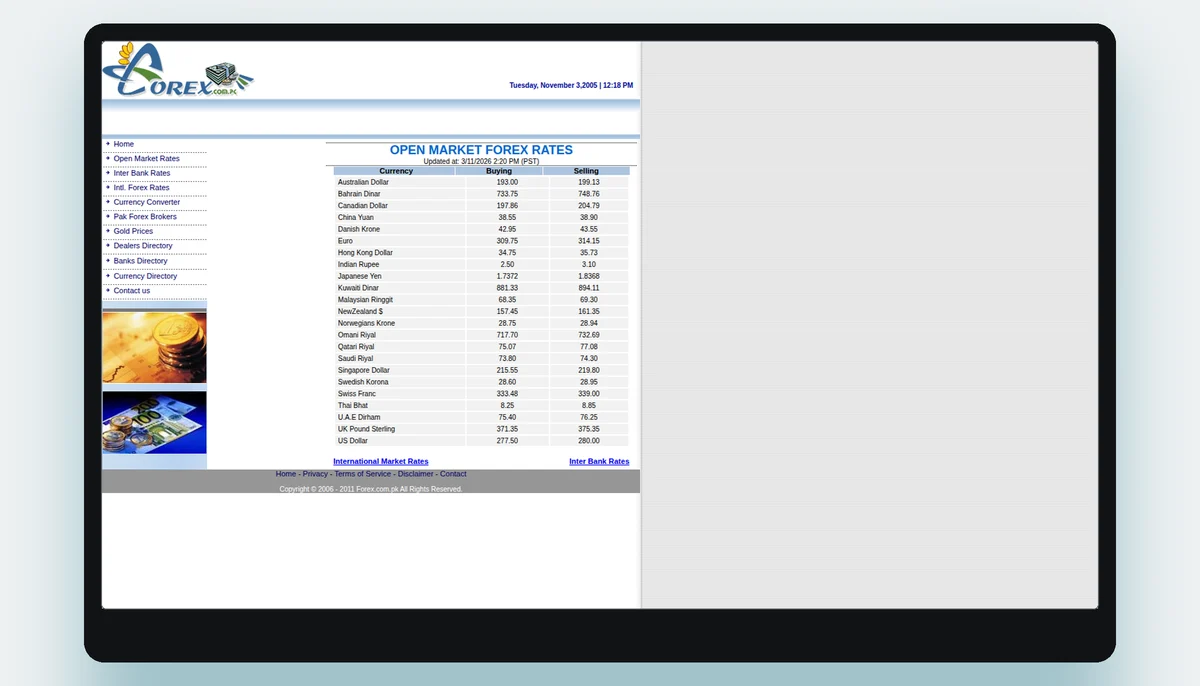
The open-market rate is the dollar buying and selling price quoted by money changers and exchange companies. It is a counter quote, typed by hand, and varies by dealer. This page explains who sets it, why the buying price is lower than the selling price, and what to ask to see on a receipt.
Who sets the open-market rate
The open-market rate is set by exchange companies and money changers. They quote a buying price and a selling price for dollars. The buying price is the rate at which they will buy dollars from you. The selling price is the rate at which they will sell dollars to you.
The rate is not set by the State Bank. It is set by the market: money changers adjust their prices in response to demand and supply of cash dollars, and in response to the interbank rate.
Why the buying price is lower than the selling price
The buying price is lower than the selling price because the money changer must make a margin. The difference between the two prices is the money changer's profit on the transaction. It also covers the cost of holding cash dollars, the risk of the exchange rate moving, and the cost of running the shop.
The margin is the counter spread. It is the price you pay for the convenience of buying or selling dollars over a counter, in cash, without a bank account.
Why rates differ by city and dealer
Rates differ by city and dealer because the open market is not a single market. A money changer in Karachi may have different costs and different demand than one in Lahore. A money changer in a busy market may quote a different rate than one in a quiet neighbourhood.
The rate also differs because money changers are not required to quote the same rate. Each dealer sets its own prices. The figure on this site is a counter quote from forex.com.pk, which is a widely followed benchmark.
What a traveller should ask to see on a receipt
A traveller buying dollars should ask to see the rate on the receipt, the amount of dollars bought, the rupee amount paid, and the date. The receipt should also show the name and address of the money changer, and the licence number if the money changer is licensed.
The receipt is proof of the transaction. If the rate on the receipt is different from the rate on the board, ask why. If the money changer will not give a receipt, do not buy.
What a family receiving money should ask to see on a receipt
A family receiving money from abroad should ask to see the rate on the receipt, the amount of dollars received, the rupee amount paid out, and the date. The receipt should also show the name and address of the money changer, and the licence number if the money changer is licensed.
The receipt is proof of the transaction. If the rate on the receipt is different from the rate quoted when the money was sent, ask why. If the money changer will not give a receipt, do not accept the money.
What the open-market rate is not
The open-market rate is not the interbank rate. It is not the rate the State Bank publishes. It is not the rate a bank will give you. It is the rate a money changer will give you, in cash, over a counter.
The open-market rate is a cash price. It is the price of dollars in the informal market. It is not a reference rate for accounting or for large transactions. It is the rate that matters if you are buying or selling cash dollars.
Key facts
Read next
Questions about today's dollar rate
Who sets the open-market rate?
The open-market rate is set by exchange companies and money changers. They quote a buying price and a selling price for dollars. The rate is not set by the State Bank.
Why is the buying price lower than the selling price?
The buying price is lower than the selling price because the money changer must make a margin. The difference between the two prices is the money changer's profit on the transaction.
Why do rates differ by city and dealer?
Rates differ by city and dealer because the open market is not a single market. A money changer in Karachi may have different costs and different demand than one in Lahore. Each dealer sets its own prices.
What should I ask to see on a receipt?
Ask to see the rate on the receipt, the amount of dollars bought or received, the rupee amount paid or paid out, and the date. The receipt should also show the name and address of the money changer.
Is the open-market rate the same as the interbank rate?
No. The open-market rate is a cash price quoted by money changers. The interbank rate is the rate banks use between themselves. The open-market rate includes a margin for the money changer.
Open a trading account with FxPro
This site is not the broker and takes no money from you. FxPro is an international broker that quotes currency pairs, including the dollar against other currencies, as contracts for difference. No cash dollars are bought, delivered or counted out. Opening an account requires identification and takes a day or two. A practice account exists and costs nothing.