
The interbank rate, explained
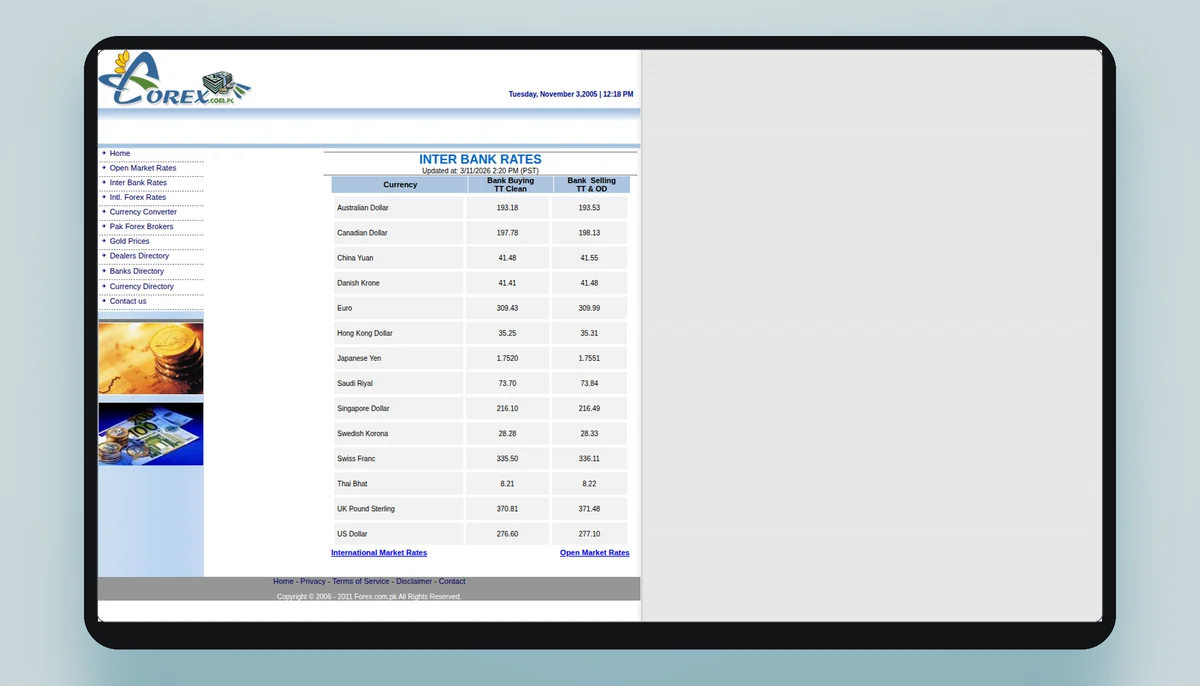
The interbank rate is the rate banks use between themselves. It is published by the State Bank of Pakistan as the M2M revaluation rate, with a weighted-average interbank bid and offer. This page explains what that means, and why a bank branch's customer rate differs from it.
What the interbank rate is
The interbank rate is the rate at which banks buy and sell dollars between themselves. It is not a rate for retail customers. It is the wholesale rate of the banking system, used for large transactions between banks.
The interbank rate is set by the market: banks quote bid and offer prices to each other, and the weighted average of those prices is the interbank rate. The State Bank publishes this rate each day that banks are open.
How the State Bank publishes the rate
The State Bank publishes the interbank rate as the M2M revaluation rate, with the weighted-average interbank bid and offer. The M2M rate is used by banks to value their foreign currency positions for accounting purposes.
The bid is the rate at which a bank will buy dollars from another bank. The offer is the rate at which a bank will sell dollars to another bank. The weighted average is the average of those prices, weighted by the volume of transactions.
Why a bank branch's customer rate differs
A bank branch's customer rate differs from the interbank rate because the bank adds a margin. The margin covers the bank's costs: the cost of handling cash, the cost of maintaining a branch network, and the profit the bank wants to make.
The customer rate also differs because the bank may use a different reference rate, or may set its own rate based on the interbank rate plus a spread. The spread varies by bank and by customer.
Who uses the interbank rate
Banks use the interbank rate for transactions between themselves. Large businesses use it for foreign exchange transactions with their banks. The State Bank uses it for its own operations.
Retail customers do not use the interbank rate. They use the bank's customer rate, which is the interbank rate plus a margin. The margin is the price of access to the banking system.
What the M2M revaluation rate is
The M2M revaluation rate is a rate published by the State Bank for mark-to-market revaluation of foreign currency positions. It is used by banks to value their foreign currency assets and liabilities at the end of each day.
The M2M rate is not a transaction rate. It is a reference rate for accounting purposes. On this site, it is the interbank rate shown, because it is the rate the State Bank publishes as the official interbank rate.
What the bid and offer mean
The bid is the rate at which a bank will buy dollars from another bank. The offer is the rate at which a bank will sell dollars to another bank. The difference between the bid and offer is the interbank spread.
The interbank spread is very small, because banks deal in large volumes and have low costs. The customer spread is larger, because the bank must cover its retail costs. The weighted-average bid and offer published by the State Bank are the average of the prices quoted by banks.
Key facts
Read next
Questions about today's dollar rate
What is the interbank rate?
The interbank rate is the rate at which banks buy and sell dollars between themselves. It is not a rate for retail customers. It is the wholesale rate of the banking system, used for large transactions between banks.
Who publishes the interbank rate?
The State Bank of Pakistan publishes the interbank rate as the M2M revaluation rate, with the weighted-average interbank bid and offer. It is published each day that banks are open.
Why is the bank's customer rate different from the interbank rate?
The bank's customer rate is different because the bank adds a margin. The margin covers the bank's costs: the cost of handling cash, the cost of maintaining a branch network, and the profit the bank wants to make.
What is the M2M revaluation rate?
The M2M revaluation rate is a rate published by the State Bank for mark-to-market revaluation of foreign currency positions. It is used by banks to value their foreign currency assets and liabilities at the end of each day.
What is the bid and offer?
The bid is the rate at which a bank will buy dollars from another bank. The offer is the rate at which a bank will sell dollars to another bank. The difference between the bid and offer is the interbank spread.
Open a trading account with FxPro
This site is not the broker and takes no money from you. FxPro is an international broker that quotes currency pairs, including the dollar against other currencies, as contracts for difference. No cash dollars are bought, delivered or counted out. Opening an account requires identification and takes a day or two. A practice account exists and costs nothing.